
- Home
- / Services
- / Polymer, Rubber & Foam Testing
Plastics, Rubber & Foam —
From Raw Material to
Finished Part
Following ISO/IEC 17025:2017 guidelines. Mechanical, thermal, electrical, flammability, and chemical characterisation of polymeric materials — from raw compound verification to finished part qualification.
Section 1 — Plastics Testing
Mechanical, Thermal & Electrical Characterisation of Plastics
| Test | Standards | Details / Measured Parameters |
|---|---|---|
| Tensile Properties | ASTM D638, ISO 527 | Tensile strength at yield and break, elongation at yield and break, Young's modulus, stress-strain curve. Dumbbell specimens, crosshead speeds as per standard. |
| Compressive Strength | ASTM D695, ISO 604 | For rigid plastics and foams. Load vs. displacement, compressive modulus, compressive strength at yield or rupture. |
| Flexural Properties | ASTM D790, ISO 178 | 3-point bend configuration. Flexural strength, flexural modulus (stiffness), flexural stress-strain curve. Span-to-depth ratios as specified by standard. |
| Izod Impact Strength | ASTM D256, ISO 180 | Notched and unnotched specimens. Room temperature (RT) and sub-zero conditions. Notch machined in-house. Impact energy per unit thickness reported. |
| Charpy Impact Strength | ISO 179 | Notched and unnotched specimens at RT and sub-zero temperatures. Edgewise and flatwise orientation. Useful for brittle and semi-brittle polymers. |
| Heat Deflection Temperature (HDT) & Vicat Softening Point | ASTM D648, ASTM D1525, ISO 75, ISO 306 | HDT at 0.455 MPa and 1.82 MPa stress. Vicat softening point at Method A (10 N) and Method B (50 N). Critical for injection-moulded and under-hood components. |
| Melt Flow Index (MFI / MFR / MVR) | ASTM D1238, ISO 1133 | Melt Mass-Flow Rate (MFR) in g/10 min and Melt Volume-Flow Rate (MVR) in cm³/10 min. Batch-to-batch compound verification. Wide range of temperatures and loads available. |
| Flammability | UL 94 (V-0 / V-1 / V-2 / HB), ISO 3795, FMVSS 302, ASTM D5132, ASTM D635 | Vertical burn rate (V-rating classification), horizontal burn rate (HB classification). ISO 3795 / FMVSS 302 burn rate for automotive interior materials. Burn rate in mm/min, after-flame and after-glow times. |
| Density / Specific Gravity | ASTM D792, ISO 1183 | Immersion / displacement method in water. Density of solid plastics to 4 decimal places. Incoming material verification and filler content inference. |
| Water Absorption | ASTM D570 | 24-hour immersion and long-term saturation moisture absorption. Percentage weight gain. Used for nylon (PA), ABS, and hygroscopic resins in humid environments. |
| Shore Hardness | ASTM D2240 | Shore A (soft plastics, elastomers) and Shore D (rigid plastics). Instantaneous and 10-second readings. Incoming inspection and comparative compound evaluation. |
| FTIR Material Identification | — | ATR-FTIR fingerprinting for polymer identification (PP, PE, PVC, ABS, PA, POM, PC, PET, etc.). Detection of polymer blends, fillers, additives, and contamination in moulded parts or raw material. |
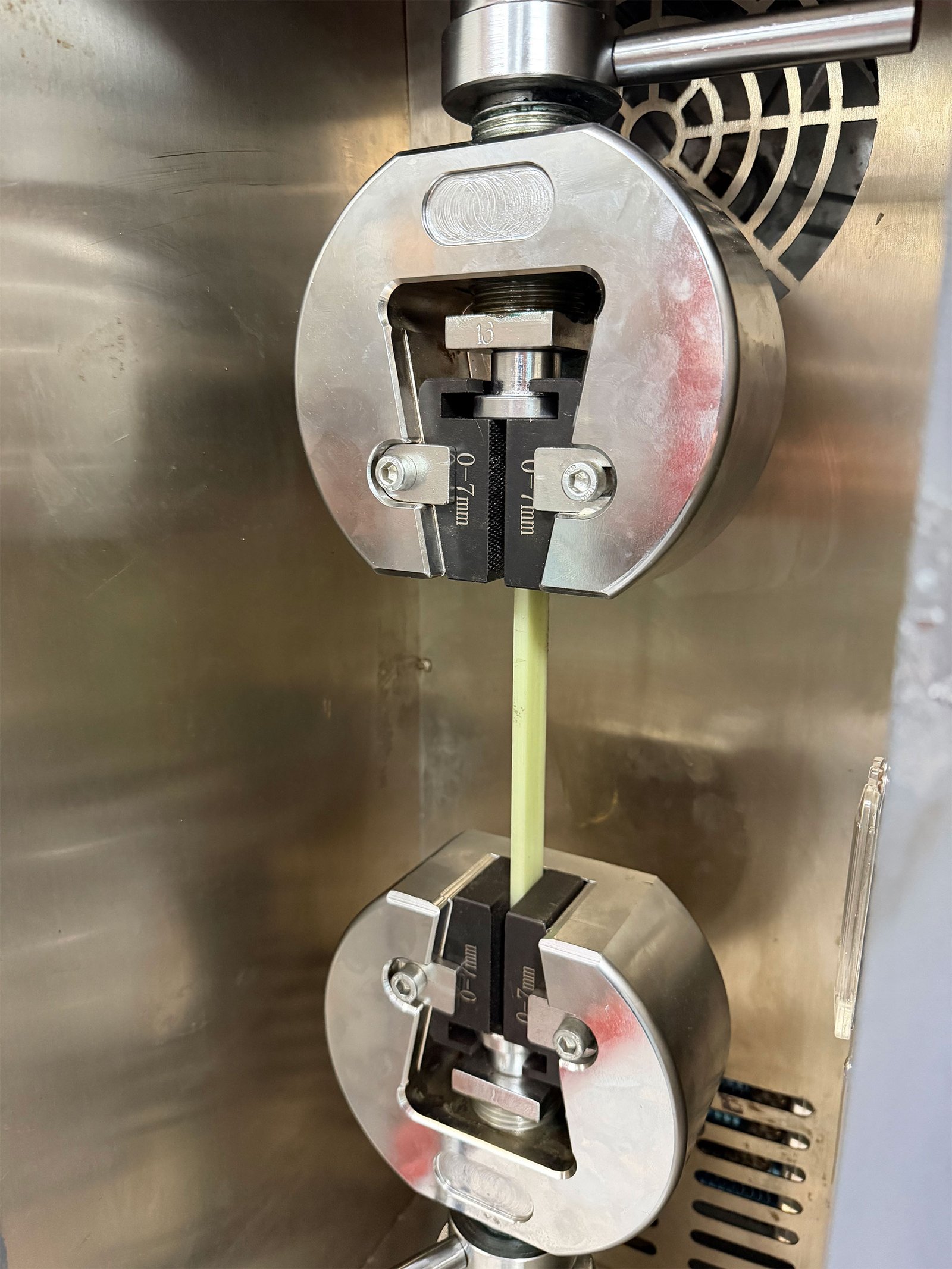
Specimen in flexural test grips
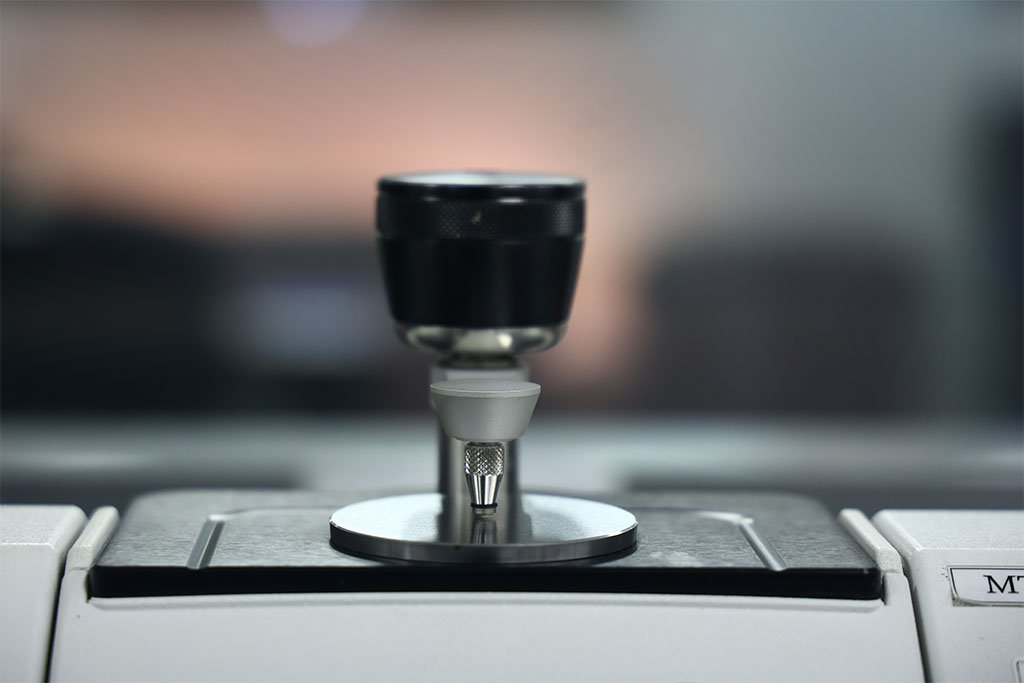
FTIR ATR — polymer identification and deformulation
| Test | Standards | Details / Measured Parameters |
|---|---|---|
| DSC / TGA / TMA | ASTM D3418, ASTM E1131 | DSC: Glass transition temperature (Tg), melting point (Tm), degree of crystallinity, heat of fusion, specific heat capacity. TGA: Thermal decomposition onset, residue/filler content, multi-step degradation. TMA: Coefficient of thermal expansion (CTE), dimensional stability, softening temperature. |
| Thermal Conductivity & Thermal Diffusivity | — | Steady-state and transient methods for engineering plastics and filled compounds. Relevant for thermally conductive polymer compounds, encapsulants, and heat-sink materials. |
| Dielectric Strength | ASTM D149 | Breakdown voltage (kV) and dielectric strength (kV/mm) for insulating plastics. Short-time and step-by-step methods. Critical for electrical insulation components and wire coatings. |
| Volume Resistivity | ASTM D257 | Volume and surface resistivity in ohm·cm. Differentiates insulating, antistatic, and conductive plastics. Relevant for ESD packaging, cable insulation, and electronic housings. |
| Color Measurement | — | CIE L*a*b* colour space measurement. Colour difference (ΔE) vs. master standard or reference plaque. Metamerism index. Used for visual consistency in consumer and automotive plastic parts. |
| Ash Content | ASTM D5630 | Determination of inorganic residue (filler content) in plastic compounds by combustion. Quantifies glass fibre, mineral filler, talc, and carbon black loading percentage. |
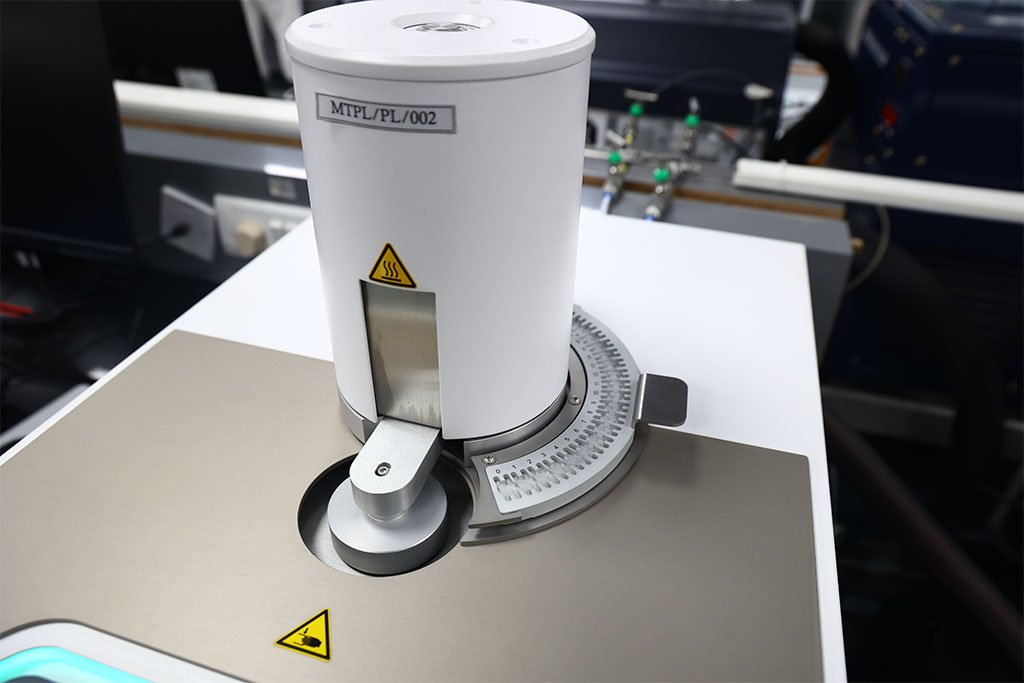
DSC with autosampler — Tg, Tm, crystallinity measurement
In-house specimen preparation: Specimens machined from plaques, injection-moulded parts, sheets, and profiles. CNC machining for dumbbell, bar, and disc geometries. Notch milling for Izod/Charpy specimens. No outsourcing of specimen preparation.
Section 2 — Rubber & Elastomer Testing
Full Mechanical & Ageing Characterisation of Rubber Compounds
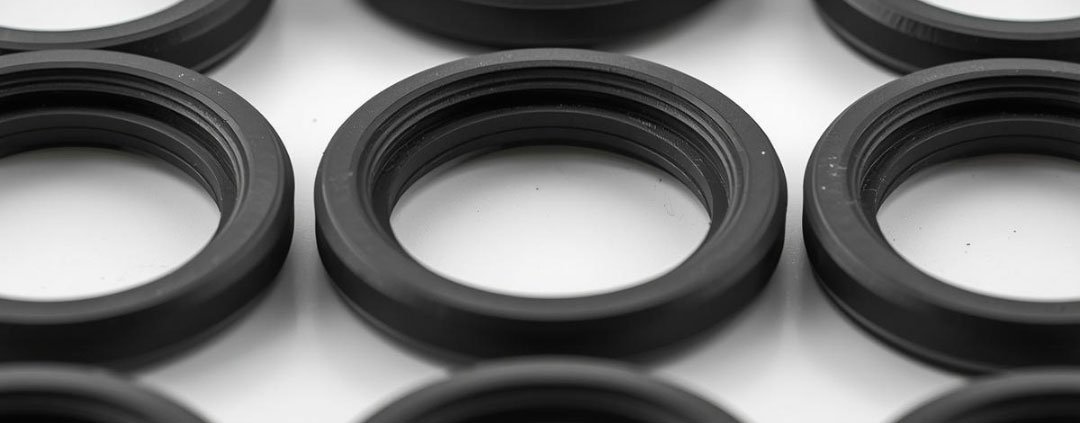
Rubber and elastomer material samples for mechanical and ageing characterisation
| Test | Standards | Details / Measured Parameters |
|---|---|---|
| Tensile Properties | ASTM D412, ISO 37 | Tensile strength, elongation at break, stress at specified elongation (modulus 100%, 200%, 300%). Die C dumbbell specimens. Extensometer or crosshead displacement. |
| Tear Strength | ASTM D624, ISO 34 | Die A (crescent), Die B (angle), and Die C (straight with cut) tear specimens. Tear strength reported in kN/m. Critical for seals, bellows, and diaphragms. |
| Hardness | ASTM D2240 (Shore A / Shore D), ISO 48 (IRHD) | Shore A durometer for standard rubber; Shore D for hard rubber. International Rubber Hardness Degrees (IRHD) for precision measurements. Micro-IRHD available for thin sections. |
| Compression Set | ASTM D395, ISO 815 | Method A (constant deflection): percentage set after defined compression, time, and temperature. Method B (constant load): load-induced creep set. Relevant for O-rings, gaskets, seals. Tested at elevated temperatures (70°C, 100°C, 125°C) and 22h / 70h durations. |
| Accelerated Heat Aging | ASTM D573, ASTM D865, ISO 188 | Oven aging at temperatures from 70°C to 200°C for defined durations. Post-aging tensile, elongation, and hardness measured. Change (%) in properties reported vs. unaged control. |
| Oil / Fuel / Chemical Resistance | ASTM D471, ISO 1817 | Immersion in reference oils (ASTM IRM 901, 902, 903), fuels (Fuel A, B, C), and hydraulic fluids. Volume change (swell %), mass change, and tensile property retention after immersion. Grades rubber for specific fluid compatibility. |
| Water Resistance / Water Absorption | — | Swelling in distilled and deionised water. Volume and mass change over defined immersion periods. Used for seals, gaskets, and submersible component qualification. |
| Density | ASTM D297, ISO 2781 | Hydrostatic (buoyancy) method for solid vulcanised rubber. Density in g/cm³. Used for compound verification and weight-per-piece calculations. |
| Abrasion Resistance (DIN Abrasion) | ASTM D5963, ISO 4649 | Rotating drum abrasion — volume loss in mm³. DIN abrasion index relative to reference compound. Critical for tyres, conveyor belt covers, shoe soles, and wear-facing applications. |
| Rebound Resilience | ISO 4662, ASTM D2632 | Bashore rebound (vertical plunger drop) and Lupke pendulum rebound. Percentage resilience reported. Indicates hysteresis and dynamic energy dissipation — relevant for vibration isolation and impact pads. |
| Ozone Resistance | ASTM D1149, ISO 1431 | Static and dynamic ozone exposure at defined concentration, time, and strain. Cracking evaluation by rating scale. Critical for outdoor seals, weatherstrips, and automotive exterior rubber. |
| Flex Fatigue / De Mattia Flex | ASTM D430, ASTM D813 | Repeated flexion of rubber specimens to initiate and propagate cracks. Cut growth rate reported in mm/kilocycle. Used for conveyor belts, hoses, boot seals, and flexible couplings. |
| Low Temperature Brittleness | ASTM D2137, ISO 812 | Brittle point (temperature at which rubber shatters under impact) and TR-10 / TR-70 retraction temperature test. Critical for cold-climate automotive and aerospace sealing applications. |
| Adhesion to Metal | ASTM D429 | Method A (90° peel) and Method B (tensile pull-off) for bonded rubber-to-metal assemblies. Failure mode analysis (cohesive vs. adhesive vs. interfacial). Used for engine mounts, bushings, and bonded isolators. |
| Ash Content | ASTM D5667 | Inorganic residue (carbon black, mineral fillers, silica, ZnO) in rubber compounds by combustion. Supports compound QC and formulation verification. |
Specimen conditioning: All rubber specimens conditioned per ASTM D1349 prior to testing. Sub-zero and elevated temperature testing conducted using temperature-controlled chambers integrated with the test frame. Results reported with uncertainty of measurement as required by ISO/IEC 17025.
Section 3 — Foam Testing
PU Foam, PE Foam & EPP — Full ASTM D3574 Test Suite
Complete comfort, structural, and flammability characterisation for flexible polyurethane, polyethylene foam, and expanded polypropylene. Automotive seating, packaging, insulation, and industrial applications.
| Test | Standards | Details / Measured Parameters |
|---|---|---|
| Density (Core Density) | ASTM D3574 Test A | Core (skin-removed) density in kg/m³ or lb/ft³. Fundamental compound and process QC parameter for flexible and rigid foams. |
| IFD — Indentation Force Deflection | ASTM D3574 Test B | 25%, 50%, and 65% IFD values measured with a 322 cm² indentor. Support Factor (SF = 65% IFD / 25% IFD) for comfort assessment. Primary specification test for automotive seat foam and mattress foams. |
| CFD — Compression Force Deflection | ASTM D3574 Test C | Compressive stress at defined strains (10%, 25%, 50%, 65%). Full compression stress-strain curve. Applicable to rigid, semi-rigid, and packaging foams where indentation area is not defined. |
| Compression Set | ASTM D3574 Test D | 50% and 75% deflection under constant compression. Conditioning at 70°C for 22 hours per standard. Percentage set after removal. Indicates long-term recovery and fatigue of seat foam. |
| Tensile Strength & Elongation | ASTM D3574 Test E | Tensile strength (kPa) and elongation at break (%) of foam in the rise direction. Dumbbell specimens. Relevant for load-bearing and structural foam applications. |
| Tear Strength | ASTM D3574 Test F | Tear resistance (N/m) using a trouser-tear specimen configuration. Evaluates resistance to tearing in seat foam, carpet underlay, and acoustic foam. |
| Air Flow / Air Permeability | ASTM D3574 Test G | Volume flow rate of air through foam at a standard pressure differential (125 Pa). Reported in dm³/s or scfm. Characterises open-cell content — critical for breathable seating foam and acoustic foam. |
| Resilience (Ball Rebound) | ASTM D3574 Test H | Steel ball dropped from 500 mm height onto foam surface. Rebound height as a percentage of drop height. Differentiates high-resilience (HR) foam from conventional foam. Important for seating comfort and cushioning. |
| Dynamic Fatigue / Roller Shear (Pounding Fatigue) | ASTM D3574 Test I | Constant-force pounding fatigue (25,000 or 80,000 cycles). Measurement of IFD retention (%) and height loss (%) after cyclic loading. Simulates years of seating use. Critical for automotive and furniture foam qualification. |
| Flammability | FMVSS 302, ISO 3795, ASTM D5132 | Horizontal burn rate for automotive interior foam. Burn rate in mm/min. Self-extinguishing classification. Required for all foam used in vehicle interiors under Federal Motor Vehicle Safety Standard 302. |
| Fogging | SAE J1756, DIN 75201 | Condensable volatile emission from foam under heat (100°C, 3h or 16h). Gravimetric (G) and reflectometric (R) methods. Measures volatile plasticisers, flame retardants, and chemical off-gassing that condense on vehicle windscreens. |
Foam specimen conditioning: All foam specimens conditioned at 23 ± 2°C and 50 ± 5% RH for a minimum of 12 hours prior to testing, per ASTM D3574 requirements. Large-format foam blocks accepted; core specimens cut in-house. Test frequency and foam type documented in report.
Industry Applications
Who We Test For
Polymer, rubber, and foam testing across the most demanding supply chains in India and globally.
Automotive Seating & Interiors
PU seat foam qualification per OEM and Tier-1 specifications: IFD, density, pounding fatigue, compression set, flammability (FMVSS 302 / ISO 3795), and fogging (SAE J1756). Interior trims in PP, ABS, PC/ABS: tensile, impact (Charpy/Izod), HDT, MFI, and UL 94 classification. Weatherstrips, door seals, and boot seals in EPDM: hardness, compression set, heat aging, and ozone resistance.
- FMVSS 302
- ASTM D3574
- SAE J1756
Packaging & Protective Foam
EPP and PE foam blocks for electronics, white goods, and industrial packaging: density, CFD, compressive strength, and resilience. Cushion curve generation and drop simulation support. Flexible PU foam for packaging inserts: IFD, tensile, and tear. Rigid polyurethane insulation foam: compressive strength, thermal conductivity, and dimensional stability.
- ASTM D3574
- ASTM D695
- Thermal Conductivity
Industrial Rubber Goods
Conveyor belt covers: DIN abrasion, tensile, tear, and ozone. Hydraulic and pneumatic seals in NBR, EPDM, and FKM: compression set, fluid resistance (ASTM D471), and low-temperature brittleness. Engine mounts and anti-vibration isolators: adhesion to metal (ASTM D429), fatigue, and rebound. Hose compounds: burst pressure and dimensional analysis.
- ASTM D412
- ISO 4649
- ASTM D429
Electrical & Electronics
Cable insulation (PVC, XLPE, silicone): dielectric strength (ASTM D149), volume resistivity (ASTM D257), tensile, elongation, and flammability. Electronic housings in PC, ABS, and glass-filled PA: UL 94 V-rating, impact, HDT, and colour measurement. Connector-grade thermoplastics: MFI, DSC, and FTIR verification.
- ASTM D149
- ASTM D257
- UL 94
Construction & Insulation
Rigid PU foam for building panels and cold storage: compressive strength (ASTM D1621), thermal conductivity, dimensional stability, and water absorption. PVC pipes and fittings: tensile, impact (falling dart / Izod), Vicat softening, and flammability. HDPE geomembranes: tensile, tear, and stress crack resistance (ESCR).
- ASTM D1621
- ISO 75
- ASTM D570
Medical Devices & Pharma Packaging
Medical-grade silicone, PP, and PE: FTIR identity confirmation, extractables profiling, tensile, and sterilisation stability. Blister packs and pharmaceutical tray materials: peel strength, moisture vapour transmission, and chemical compatibility. Biocompatibility-supporting mechanical and chemical characterisation per ISO 10993 scope.
- FTIR
- DSC/TGA
- ASTM D638
Extended Capabilities
Also Available — Specialised & Custom Protocols
Beyond the core test list, our polymer testing group supports the following advanced and application-specific capabilities:
Xenon Arc & UV Weathering of Plastics
Accelerated outdoor weathering simulation per SAE J1960, ISO 4892-2 (xenon arc) and ISO 4892-3, ASTM G154 (UV fluorescent). Colour fade (ΔE), gloss retention, tensile property retention, and surface cracking after exposure. Applicable to automotive exterior trims, construction plastics, and consumer products.
Custom OEM Test Protocols
Testing to OEM-specific internal standards: Maruti Suzuki, Tata Motors, Mahindra, Ashok Leyland, Toyota, Honda, Volkswagen Group (VW, Skoda), and major Tier-1 supplier specifications. Combined test sequences (e.g., heat aging followed by tensile; UV followed by impact) executed as a single programme with unified reporting.
Environmental Stress Cracking Resistance (ESCR)
ASTM D1693 (ESCR bent-strip test) for polyethylene in contact with surfactants, detergents, and chemicals. Critical for HDPE containers, geomembranes, and piping in chemical environments. F50 and F0 failure times reported.
Failure Analysis of Plastic & Rubber Parts
Root cause failure analysis (RCFA) of fractured, cracked, degraded, or delaminated polymer parts. Combined FTIR (material verification), DSC/TGA (thermal degradation), SEM/EDS (fracture surface and contamination), and mechanical testing. Investigation reports with probable cause and recommended corrective action.
Chemical Compatibility & Fluid Resistance
Immersion testing in customer-specified chemicals, solvents, lubricants, and fuels. Weight, dimension, hardness, and tensile property change after defined exposure. Supports material selection for seals, tanks, liners, and fluid-handling components.
Incoming Material Qualification (IMQ)
Batch-to-batch incoming quality control programmes for compounders, moulders, and OEM procurement teams. MFI, FTIR, density, tensile, and DSC as standard IMQ panels. Repeat-use purchase orders with rapid turnaround (24–48 h for standard tests).
Testing by Polymer Family
Test selection depends on your material type
Commodity Thermoplastics
PP, PE, PVC, PS, ABS
Tensile (D638), flexure (D790), impact (D256), MFI (D1238), HDT/Vicat (D648/D1525), density, hardness. High-volume QC and incoming material verification.
ASTM D638 · D790 · D256 · D1238 · D648
Engineering Thermoplastics
PA, POM, PC, PBT, PET, PEEK
Tensile at temperature, fatigue, creep, moisture absorption effects, DSC (Tg, Tm, crystallinity), FTIR identification. Performance validation under operating conditions.
ASTM D638 · D790 · D3418 · D5296 · ISO 11357
Elastomers & Rubber
NR, NBR, EPDM, silicone, FKM
Tensile (D412), tear (D624), compression set (D395), hardness (Shore A/D), aging (D573), ozone resistance (D1149). Seal and gasket qualification testing.
ASTM D412 · D624 · D395 · D2240 · D573
Foams
PU, EPP, EPS, XPS, melamine
Compression (D1621), tensile, density, water absorption, dimensional stability, flammability screening. Packaging, insulation, and automotive interior foam qualification.
ASTM D1621 · D1622 · D2126 · C518
Thermosets
Epoxy, phenolic, polyester, vinyl ester
Flexure, HDT, Tg (DMA/DSC), cure characterisation, water absorption, chemical resistance. Matrix qualification for composites and electrical applications.
ASTM D790 · D648 · D3418 · D570 · D543
Degradation & Failure Investigation
Identifying why polymer components fail in service
Material Identification
FTIR spectroscopy for polymer type confirmation. DSC for melting point, glass transition, and crystallinity. Essential when material grade is unknown or disputed.
Thermal Degradation
DSC and TGA to detect thermal history, over-processing, or heat damage. Comparison between failed and reference samples reveals processing anomalies.
Environmental Stress Cracking
Identification of chemical attack, UV degradation, or ESC through microscopy, FTIR (carbonyl index), and mechanical property comparison before/after exposure.
Filler & Additive Analysis
Ash content, TGA decomposition profiling, and FTIR for filler type identification. Verifying that formulation matches specification — glass fibre content, carbon black loading, plasticiser levels.
5–7 Days
Standard Turnaround
2–3 Days
Express Available
ISO 17025
Reports
Related Services
Composites Testing
CFRP, GFRP, aramid mechanical, thermal, and microstructural characterisation
Environmental Testing
Xenon arc, UV weathering, thermal shock, and humidity cycling
Product Validation
OEM qualification, environmental endurance, vibration, and IP rating testing
Packaging & Tapes
Corrugated board, adhesive tape, flexible packaging, and transport simulation testing
Ready to Submit Samples for Polymer Testing?
Our polymer testing engineers will review your specification, confirm the applicable test methods, and provide a turnaround commitment before you ship samples.