
- Home
- / Services
- / Metals Testing
Complete Metals Testing —
From Incoming Material to Field Failure
Mechanical, chemical, metallographic, corrosion, fatigue, fracture, creep, weld qualification, and advanced characterisation — all in-house. One lab. Every metal test you need.
Section 1 — Mechanical Testing
Tensile to Fracture. RT to 900°C. 5 kN to 1500 kN (150 T).
Complete mechanical characterisation of metals and alloys — from routine incoming inspection to advanced strain-rate and full-field DIC testing.
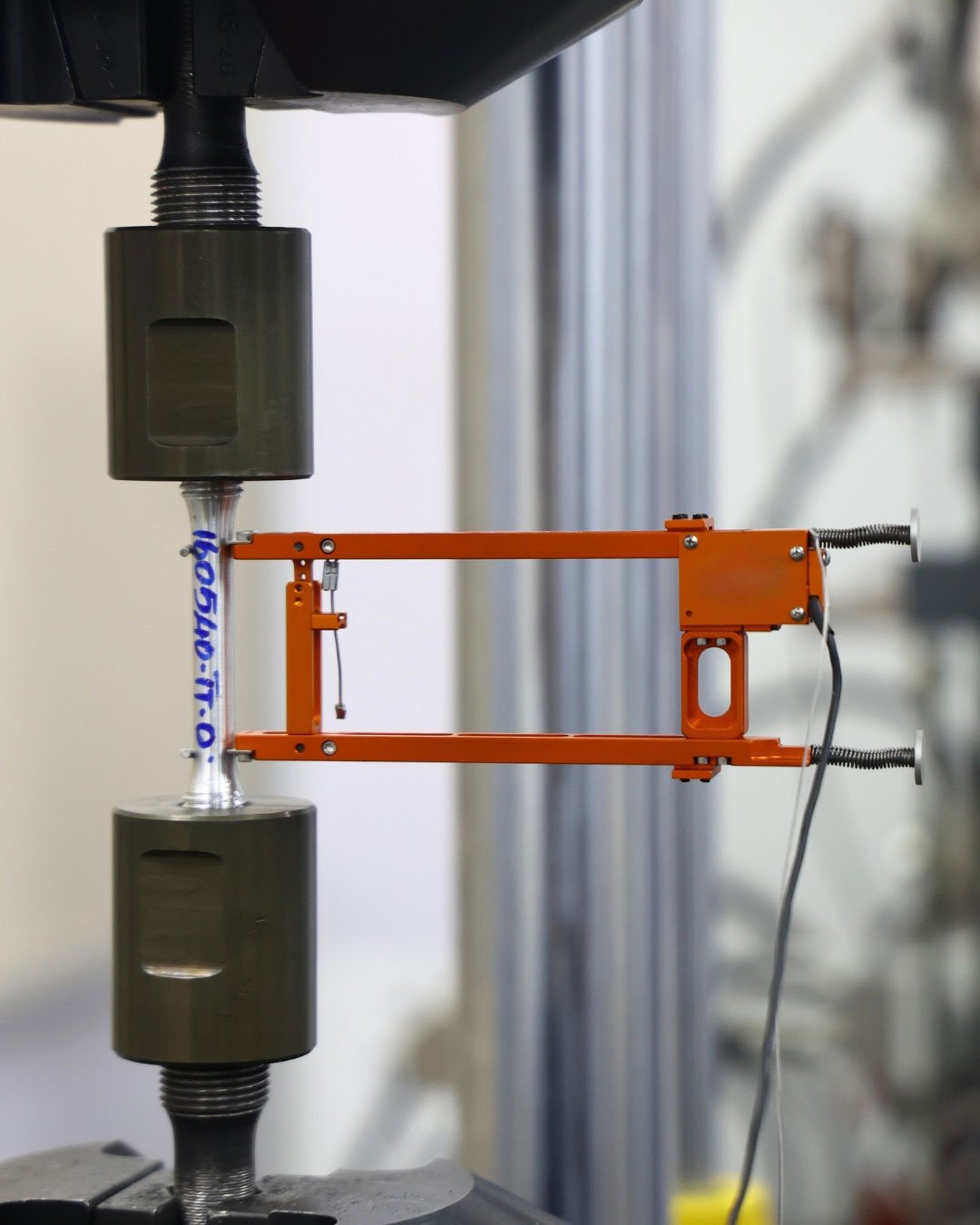
Tensile test with clip-on extensometer
| Category | Key Tests | Standards |
|---|---|---|
| Tensile | RT tensile, elevated temperature (50–900°C), through-thickness Z-direction, fine wire & foil, TMT bars & pipes, 0.2% proof stress | ASTM E8/E8M, E21, A370, A770, ISO 6892-1/2, EN 10164, IS 1608 |
| Impact | Charpy V-notch (RT to −196°C), Izod, DBTT curve series, Drop-Weight Tear Test (DWTT), drop-weight nil-ductility (E208) | ASTM E23, E208, ISO 148, API 5L |
| Hardness | Rockwell (HRA/HRB/HRC), Brinell, Vickers, Micro-Vickers (HV 0.01–1 kgf), Knoop, portable / field hardness | ASTM E18, E10, E92, E384, IS 1500 |
| Bend & Formability | Guided bend (root / face / side), flare, flattening (tubes & pipes), Erichsen cupping, ring expansion | ASTM E190, A370, ISO 20482, IS 10175 |
| Fasteners | Proof load, wedge tensile, axial tensile, hydrogen embrittlement detection, torque, stripping strength, head soundness | ASTM F606, IS 1367, IS 6623, ISO 898 |
| Compression & Others | Spring load & rate, crush, flexural, single/double shear, pull-out, push-out, bearing stress, torsion | Various ASTM / IS |
| High Strain Rate | Split Hopkinson Pressure Bar (SHPB) — 10² to 10&sup4; /s dynamic material characterisation | — |
| Full-Field Strain (DIC) | 2D Digital Image Correlation — strain mapping, localisation, Poisson's ratio, r-value | — |
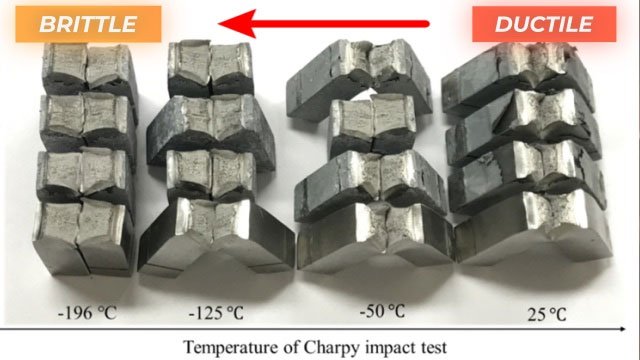
Charpy DBTT series: −196°C to +25°C showing ductile-to-brittle transition
For fatigue, fracture toughness (KIC/JIC/CTOD), crack growth (da/dN), and creep/stress rupture — these require dedicated pages with full test matrices and equipment specs.
Section 2 — Chemical Analysis
28+ Elements by OES. ppb-Level Traces by ICP-MS. 250+ CRMs.
Elemental composition, interstitial gases, trace contaminants, and rapid alloy identification — using primary instruments calibrated against certified reference materials.
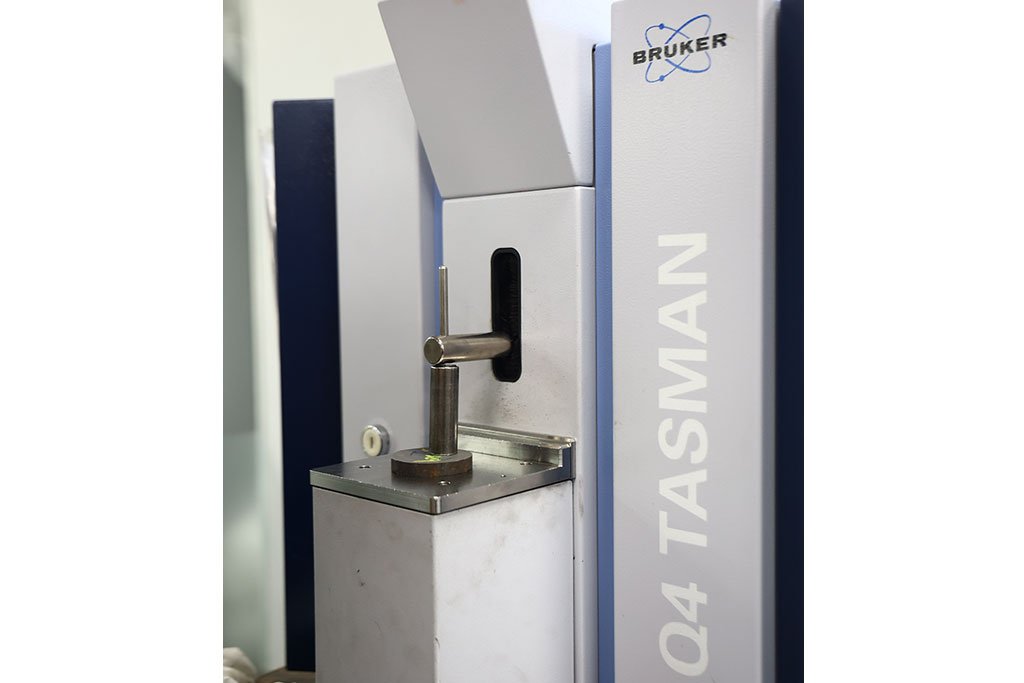
Bruker Q4 Tasman — Spark OES spectrometer
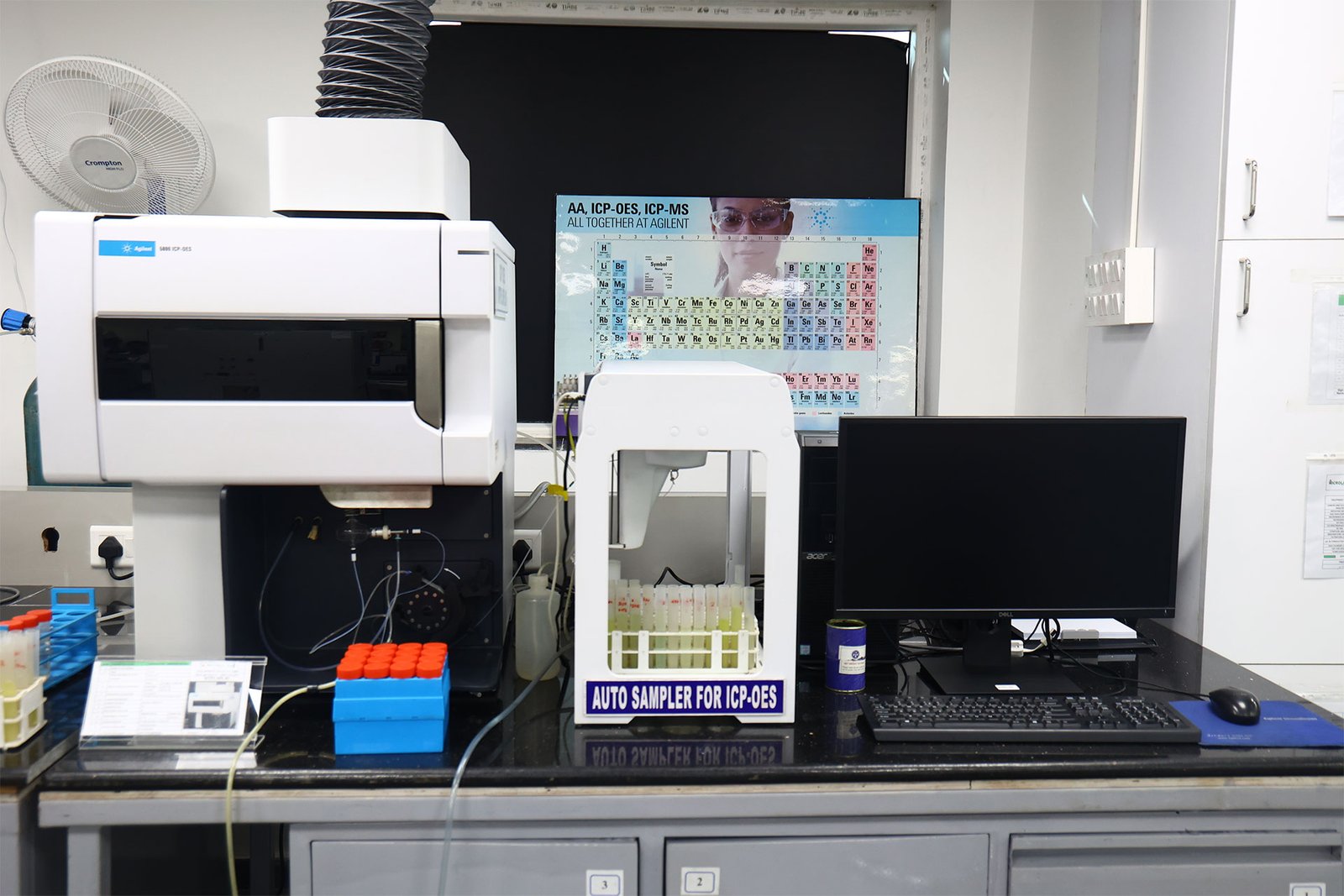
Agilent ICP-OES with autosampler
Analytical Methods
OES (Optical Emission)
28+ elements in iron, copper, aluminium, nickel, titanium, zinc, cobalt, and magnesium base alloys. Primary composition certification. 250+ certified reference materials.
ICP-MS
ppb-level trace element quantification — critical for nuclear, aerospace, and pharmaceutical-grade metals.
Gas Analysis O/N/H
Oxygen, nitrogen, and hydrogen content in steels and titanium alloys per ASTM E1019, E1409, E1447. Inert-gas fusion technique.
Carbon & Sulphur
Instrumental combustion analysis — Strohelin and G4 ICARUS instruments. Accurate to ppm levels. Covers all carbon and alloy steels.
XRF (Handheld)
Rapid alloy identification and positive material identification (PMI) — in-lab and onsite. Grade confirmation in <60 seconds.
Wet Chemistry
Classical gravimetric and titrimetric methods for elements where OES is not primary — boron, tin, lead, bismuth in specific alloys.
Material Bases Covered
| Base Metal | Alloy Types |
|---|---|
| Iron Base | Carbon steel, stainless (304/316/321/347/duplex), low alloy, Mn, cast iron, tool steel |
| Copper Base | Brass, gun metal, aluminium bronze, beryllium copper, zirconium copper, bronze |
| Aluminium Base | All wrought and cast alloys — 2000, 5000, 6000, 7000 series |
| Nickel Base | Inconel 625/718, Hastelloy C-276/C-22, Monel 400/K500, Waspaloy |
| Titanium Base | CP Grade 1–4, Ti-6Al-4V (Grade 5), Ti-6Al-4V ELI (Grade 23) |
| Zinc Base | Die-cast zinc alloys, Zamak grades |
| Cobalt Base | Stellite, cobalt superalloys |
| Magnesium Base | AZ31, AZ61, AZ91 and other Mg alloys |
Section 3 — Metallography & Microstructural Evaluation
Every ASTM Metallographic Standard. Macro to Nanometre.
Quantitative microstructural assessment using calibrated optical microscopy, automated image analysis, Ferritscope, and FE-SEM/EBSD for crystallographic characterisation.
ASTM E112
Grain Size Determination
Planimetric, intercept, and comparison methods. Automated image analysis for ASTM grain size number. Ferritic, austenitic, and mixed microstructures.
ASTM E45
Inclusion Rating
Type A (sulphide), B (alumina), C (silicate), D (globular oxide). Method A (chart) and D (automated). Critical for bearing steels, critical pressure vessel grades.
ASTM E1077
Decarburisation Depth
Total, free, and partial decarburisation measurement. Metallographic section and micro-hardness traverse methods. Fastener, spring, and gear steel qualification.
ASTM E92 / E384
Case Depth Measurement
Effective and total case depth by Vickers and micro-Vickers hardness traverse. Carburised, nitrided, induction-hardened, and carbo-nitrided cases.
ASTM A800 / Ferritscope
Ferrite Content
Magnetic measurement by Ferritscope for austenitic and duplex SS welds and base metal. Non-destructive, direct-reading. WRC ferrite number correlation.
ASTM E562
Duplex SS Phase Fraction
Systematic point counting for ferrite/austenite phase volume fraction in duplex and super duplex stainless steels. Per pipeline, subsea, and offshore codes.
ASTM A255
Jominy End-Quench Hardenability
Hardenability band determination for alloy and case-hardening steels. Full Jominy curve plotted. SAE/AISI grade verification.
ASTM E340 / E407
Macro & Micro Examination
Macroetch (sulphur print, acid etch) for billet, forgings, welds. Microetch for phase identification. 100+ etchant recipes for alloy-specific development.
ASTM E2283 / E2491
Extreme Value Statistics
Maximum inclusion size prediction per ASTM E2283 and E2491. Relevant for fatigue-critical rotating parts and bearing-grade steels.
For FE-SEM fractography, EBSD crystallographic mapping, EDS elemental analysis, and failure analysis at nm resolution — our dedicated SEM/EBSD page covers instruments, capabilities, and case studies.
Section 4 — Corrosion Testing
NACE Sour Service. ASTM IGC & Pitting. Electrochemical. Salt Spray.
Comprehensive corrosion qualification covering oil & gas sour service, stainless steel IGC, duplex SS intermetallic phase detection, electrochemical polarisation, and coating evaluation.
Sour Service — NACE
SSCC (Sulphide Stress Corrosion Cracking)
NACE TM0177 Methods A (constant load), B (bent beam), C (C-ring), D (DCB). H₂S saturated brine at ambient. Required for linepipe, valves, and downhole components per NACE MR0175 / ISO 15156.
Sour Service — NACE
HIC (Hydrogen Induced Cracking)
NACE TM0284 — CLR, CTR, and CSR measurements. Immersion in NACE Solution A and B. Required for pipelines, pressure vessels, and storage tanks in sour environments.
IGC — Austenitic SS
ASTM A262 — All 5 Practices (A–E)
Practice A (oxalic acid etch screen), B (ferric sulphate-H₂SO₄), C (nitric acid), D (copper sulphate-16% H₂SO₄), E (copper sulphate-50% H₂SO₄). Sensitisation detection for 304, 316, 321, 347.
IGC — Ferritic SS
ASTM A763 — Practices W/X/Y/Z
Corrosion testing for ferritic stainless steel grades. Four practices covering oxalic acid etch through copper sulphate-sulphuric acid methods.
IGC — Nickel Alloys
ASTM G28 Methods A & B
Ferric sulphate-50% H₂SO₄ (Method A) and boiling HCl (Method B) for Ni-Cr-Mo alloys — Hastelloy C-276, C-22, alloy 625, and similar.
IGC — GOST
GOST 6032 — Methods AM, AMU, B
Russian-standard IGC testing required for EPC and export projects specifying GOST grades. Boiling H₂SO₄ + CuSO₄ immersion methods.
Pitting & Crevice
ASTM G48 — Methods A–F
Pitting (A/C/E) and crevice (B/D/F) resistance in FeCl₃ solutions at controlled temperatures. Critical for duplex, super duplex, and 6Mo austenitic SS qualification.
Intermetallic Phases — Duplex SS
ASTM A923 — Methods A/B/C
Sodium hydroxide etch (A), Charpy impact (B), and FeCl₃ (C) for detecting detrimental intermetallic phases (sigma, chi, etc.) in duplex and super duplex SS.
Stress Corrosion Cracking
ASTM G36 — Chloride SCC
Stress corrosion cracking in boiling 45% magnesium chloride solution. Austenitic and nickel alloy screening. U-bend and C-ring specimens.
Accelerated Corrosion
Salt Spray — ASTM B117
Neutral salt spray (NSS), acetic acid salt spray (ASS), copper-accelerated (CASS). Duration from 24 h to 1000+ h. Coated, plated, and bare metal specimens.
Electrochemical
Potentiodynamic, Cyclic & EIS
Potentiostatic/potentiodynamic polarisation (ASTM G5, G59), cyclic polarisation (G61), electrochemical impedance spectroscopy (EIS). Corrosion rate, pitting potential, repassivation.
Coating Evaluation
Zinc & Phosphate Coating Mass
Zinc coating mass by gravimetric strip per ASTM A90, IS 2629, IS 6745. Phosphate coating mass per IS 3618. Metallic coating thickness per ASTM B137.
Full corrosion testing page includes complete standard cross-references, specimen requirements, exposure conditions, acceptance criteria, and reporting format details for all methods above.
Section 5 — Fatigue, Fracture & Creep
First Commercial Fracture Mechanics Lab in South India
Advanced damage-tolerance testing for structural integrity assessment, fitness-for-service evaluation, and life prediction of critical metal components.
Fracture Toughness
KIC / JIC / CTOD
Linear-elastic (KIC) and elastic-plastic (JIC, CTOD) fracture toughness. Geometries: CT, SEB, DCT, AT, AB specimens. Elevated temperature capability. Rising load and partial-unloading compliance methods.
- ASTM E399
- ASTM E1820
- ISO 12135
- BS 7448-1
Fatigue Crack Growth
da/dN — Paris Law Constants
Fatigue crack growth rate at controlled ΔK levels. Paris Law constants (C, m), threshold ΔKth, and effect of R-ratio. Applied to pipelines, pressure vessels, shafts, and turbine components.
- ASTM E647
- ISO 12108
High & Low Cycle Fatigue
HCF S-N Curves / LCF ε-N Curves
High cycle fatigue endurance testing to determine S-N curves and fatigue limit. Low cycle fatigue (strain-controlled) for ε-N data and cyclic stress-strain response. Axial, bending, and torsional loading modes.
- ASTM E466
- ASTM E606
- ISO 12110
- ISO 1143
Creep & Stress Rupture
Sustained Load to 1000°C
Creep strain vs. time, rupture life, minimum creep rate, and stress relaxation. 20+ servo-electric creep machines running simultaneously. Critical for power generation, aerospace, and petrochemical elevated-temperature components.
- ASTM E139
- ASTM E292
- ASTM E328
- ISO 204
The dedicated fatigue & fracture page covers all test geometries, equipment specifications, temperature envelopes, waveform types, and reporting formats in full detail.
Section 6 — Weld Qualification
10 International Welding Codes. PQR. WPQ. Electrode Qualification.
Complete mechanical and metallographic testing for weld procedure qualification records (PQR) and welder performance qualification (WPQ) under all major international codes.
Mechanical Tests
All-Weld-Metal Tensile, Bend, Impact
Tensile (transverse and all-weld-metal), root/face/side guided bend, Charpy impact at specified temperatures, hardness surveys (Vickers traverse), nick break, and fracture toughness for critical welds.
Metallographic
Macro & Micro Examination
Macro section for bead geometry, penetration, HAZ width, and defect detection. Micro examination for grain structure, phase balance (ferrite in SS welds), and intermetallic precipitation.
Chemical
Weld Metal Composition
All-weld-metal chemical analysis for composition compliance. Delta ferrite by Ferritscope for austenitic SS welds. Carbon equivalent for preheat calculations.
Welding Codes Covered
- ASME Section IX
- AWS D1.1 (Structural)
- AWS D1.2 (Aluminium)
- AWS D1.6 (Stainless)
- API 1104 (Pipeline)
- EN ISO 15614-1
- EN ISO 15614-2
- AS/NZS 3992
- GOST 6996
- PNAE G-10-032 (Nuclear)
Our weld qualification page details the complete test matrix for each code, accepted specimen types, dimensional requirements, acceptance criteria, and certificate formats for PQR, WPQ, and electrode qualification.
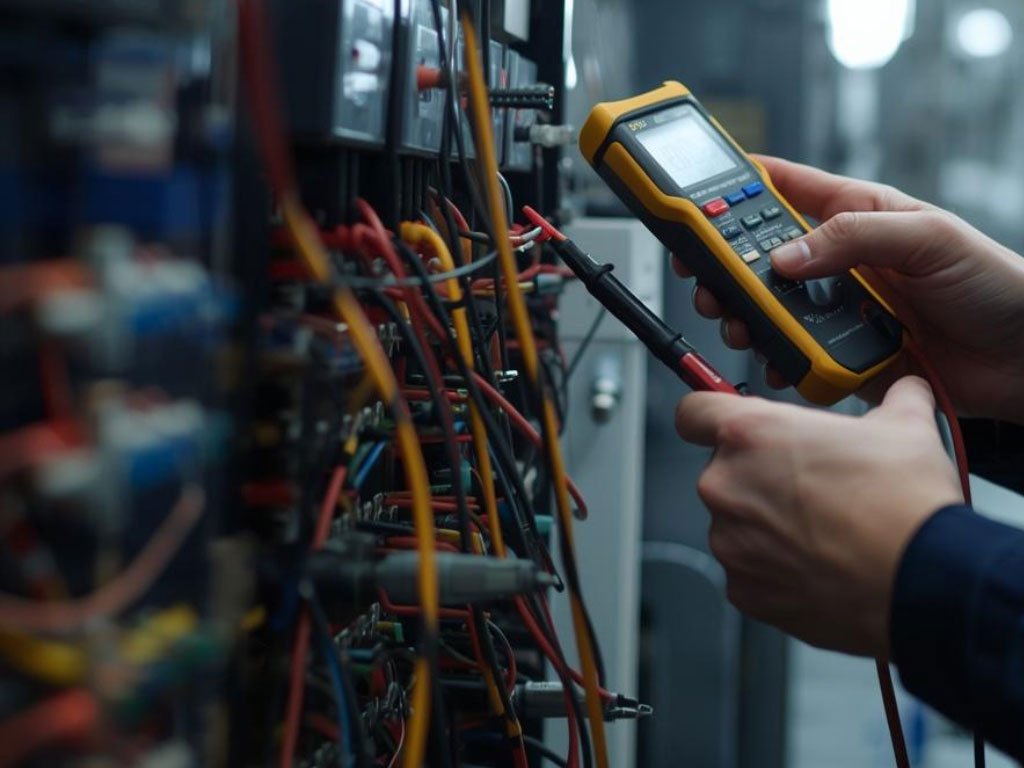
Section 7 — Material Types Covered
Every Major Metal Family. Every Test Stage.
From incoming raw material inspection to in-service failure investigation — for all commercial and specialty metal alloy systems.
●
Carbon & Low Alloy Steel
Mild steel, HSLA, dual-phase (DP), TRIP, martensitic, boron steel, spring steel, TMT bars, structural sections, pressure vessel plates.
●
Stainless Steel
304/304L, 316/316L, 321, 347, 310, 410, 420, 430, duplex (2205), super duplex (2507), 6Mo, precipitation-hardening (17-4 PH, 15-5 PH).
●
Nickel Alloys
Inconel 625, 718, 825, Hastelloy C-276, C-22, G-35, Monel 400, K500, Waspaloy, Nimonic 80A/90, Incoloy 800/825/925.
●
Titanium Alloys
CP Ti Grades 1–4, Ti-6Al-4V (Grade 5), Ti-6Al-4V ELI (Grade 23), Ti-3Al-2.5V, Ti-6Al-2Sn-4Zr-2Mo, near-alpha and beta alloys.
●
Aluminium Alloys
Wrought: 2024, 6061, 6082, 7075, 7010. Cast: A356, A380. Sheet, plate, extrusion, forging. Aerospace, automotive, and structural grades.
●
Copper Alloys
Copper (ETP, DHP), brass (60/40, 70/30, leaded), bronze (tin, aluminium, silicon), gun metal, beryllium copper, cupronickel, zirconium copper.
●
Cast Iron
Grey iron (IS 210), SG / ductile iron (IS 1865), white iron, malleable iron (whiteheart, blackheart). Brake drums, housings, pipe fittings.
●
Tool Steel & High-Speed Steel
Cold work (D2, O1), hot work (H11, H13), high speed (M2, T1). Hardness profile, retained austenite, carbide distribution, decarburisation.
●
Cobalt, Magnesium & Zinc Alloys
Cobalt superalloys and Stellite grades. Magnesium alloys (AZ, ZK series). Zinc die-cast alloys (Zamak). OES, mechanical properties, and corrosion.
In-House Specimen Preparation — No Outsourcing
All test specimens are machined in-house using our CNC turning centres, VMC (vertical machining centre), and EDM wire-cut machines. Specimens are prepared to exact ASTM and ISO dimensional tolerances — CT specimens for fracture toughness, dog-bone tensile, Charpy V-notch, SEB beams, and custom configurations for any test geometry. No specimen leaves our facility before testing. No custody gaps. No delays from external machine shops.
Dimensional verification records provided with test reports on request.
CNC Turning
VMC Milling
EDM Wire-Cut
In-House
No Outsourcing
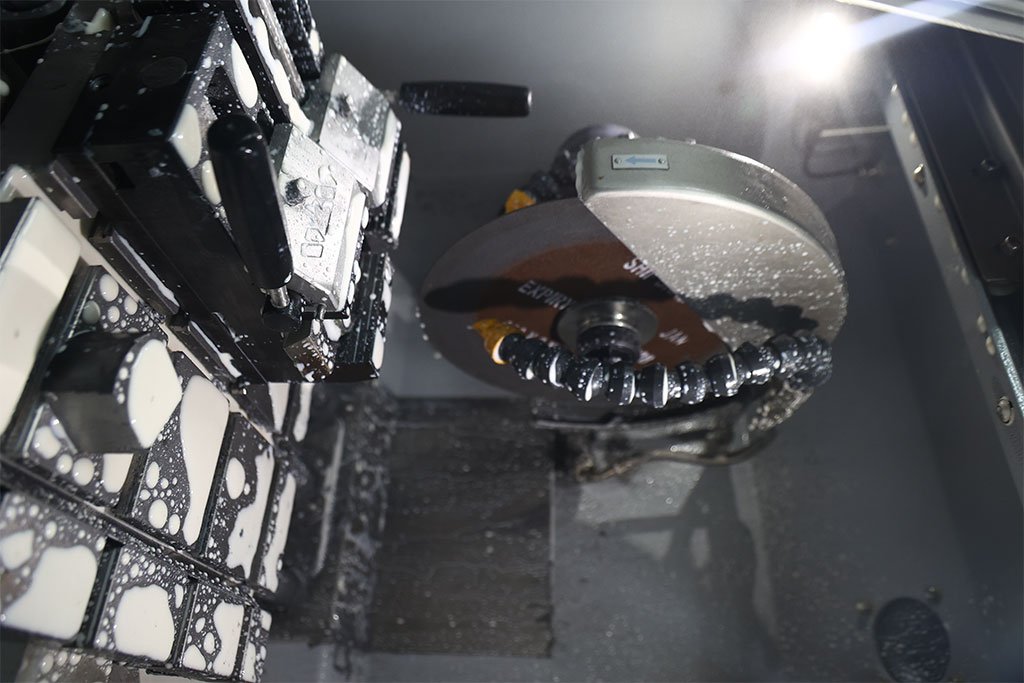
Precision abrasive cutting machine
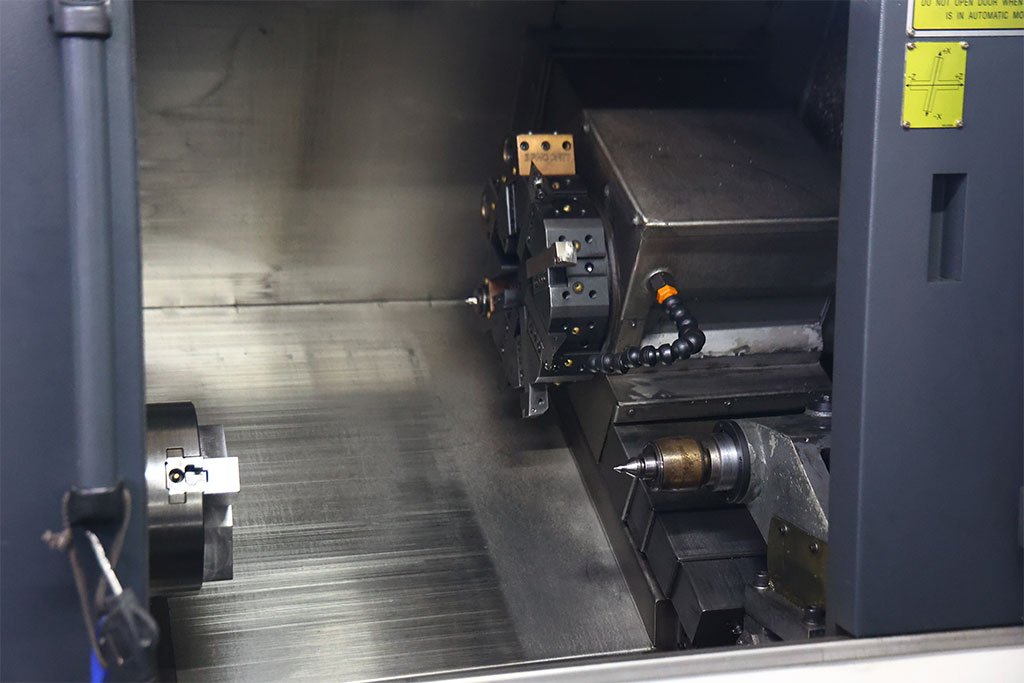
CNC turning center for specimen machining
Deep-Dive Dedicated Pages
Need the Full Picture?
Each dedicated page covers complete test matrices, equipment specifications, standard-by-standard acceptance criteria, and specimen requirements.
Fatigue, Fracture & Creep
KIC, JIC, CTOD, da/dN, HCF/LCF, rotating bending, torsional fatigue, creep/stress rupture to 1000°C. 20+ creep machines. First commercial fracture mechanics lab in South India.
- ASTM E399
- E1820
- E647
- E606
Corrosion Testing
SSCC (TM0177), HIC (TM0284), IGC (A262/A763/G28/GOST 6032), pitting & crevice (G48), SCC (G36), salt spray (B117), electrochemical, coating mass.
- NACE TM0177
- TM0284
- ASTM G48
Weld Qualification
PQR and WPQ under ASME IX, AWS D1.1/D1.2/D1.6, API 1104, EN ISO 15614, AS/NZS 3992, GOST 6996, PNAE (nuclear). Full mechanical, metallographic, and chemical suite.
- ASME IX
- AWS D1.1
- API 1104
FE-SEM / EDS / EBSD
Thermo Fisher + Zeiss + COXEM FE-SEMs. nm-resolution fractography, EDS elemental mapping, EBSD orientation mapping, phase identification, failure analysis at the microstructural level.
- Fractography
- EBSD
- EDS Mapping
Testing Across the Material Lifecycle
From incoming inspection to residual life assessment
Incoming Inspection
Raw material verification
Tensile, chemistry (OES/ICP), hardness, and microstructure checks against purchase-order specs. Grade confirmation, heat/lot traceability, and standard-specific certificates for procurement sign-off.
ASTM E8 · A751 · E18 · E112 · IS 2062 · EN 10204 3.1
Process Validation
Heat treatment & forming verification
Post-treatment mechanical testing, microstructure evaluation, and hardness profiling to confirm process parameters. Carburising/nitriding case depth, decarburisation checks, grain-size validation.
ASTM E384 · E112 · E1077 · IS 1587
Weld Qualification
WPS/PQR support
Full mechanical test battery for weld procedure qualification — tensile, bend, impact (weld/HAZ/BM), hardness survey, macro/micro examination. Cross-weld and all-weld-metal specimens.
ASME IX · AWS D1.1 · ISO 15614 · EN ISO 9606
Failure Investigation
Root-cause analysis
Combined mechanical, chemical, metallographic, and SEM analysis to establish failure origin, mechanism, and contributing factors. Litigation-grade evidence handling and chain-of-custody documentation.
ASTM E2860 · Fractography · EDS/EBSD
Residual Life Assessment
In-service components
Creep assessment, replica metallography, hardness mapping, and degradation analysis for ageing infrastructure — boiler tubes, steam piping, reactor vessels, heat exchangers.
ASTM E139 · API 579 · IBR
Alloy-Family Testing Pathways
Material-specific test programs and standards
| Alloy Family | Typical Tests | Key Standards | Common Applications |
|---|---|---|---|
| Carbon & Alloy Steel | Tensile, impact, hardness, chemistry (OES), bend, flattening | ASTM A370, E8, E23, IS 2062, IS 1608 | Structural, pressure vessels, piping, fasteners |
| Stainless Steel | Tensile, IGC, pitting, ferrite content, microstructure | ASTM A262, G48, A370, E112 | Chemical processing, food, pharma, marine |
| Aluminium Alloys | Tensile, hardness, conductivity, microstructure, SCC | ASTM B557, E18, B117, G47 | Aerospace, automotive, packaging |
| Titanium Alloys | Tensile (RT & elevated), fracture toughness, fatigue, microstructure | ASTM E8, E399, E466, B265 | Aerospace, medical implants, marine |
| Nickel Alloys | Tensile (high-temp), creep, IGC, stress rupture, chemistry | ASTM E21, E139, G28, B166/B168 | Gas turbines, chemical processing, oil & gas |
| Copper Alloys | Tensile, hardness, conductivity, dezincification, microstructure | ASTM E8, B846, ISO 6509 | Electrical, plumbing, marine, heat exchangers |
| Cast Iron | Tensile, hardness, microstructure (nodularity), chemistry | ASTM A370, E8, A247, IS 1865 | Automotive, pump housings, machine bases |
Test Equipment Capabilities
Measurable boundaries of our testing infrastructure
150 T
Max tensile load capacity
1200 °C
Furnace temperature
-196 °C
Cryogenic impact testing
HV 0.01–50 kg
Hardness scales
| Parameter | Range / Capability | Standards |
|---|---|---|
| Universal Testing (Tensile/Compression) | 5 kN to 1500 kN (150 T), strain-controlled & load-controlled | ASTM E8, ISO 6892 |
| Impact Testing | Charpy V-notch, -196 °C to +300 °C, sub-size & full-size | ASTM E23, ISO 148 |
| Hardness | Vickers (HV 0.01–50), Rockwell (HRA/HRB/HRC), Brinell (HBW 10/3000) | ASTM E10, E18, E92, E384 |
| Chemistry (OES) | Fe, Al, Cu, Ni, Ti, Co base — 25+ elements per spark | ASTM E415, E1086 |
| Chemistry (ICP-OES) | Trace to % level, dissolved & total metals, ores, alloys | ASTM E1479, EPA 6010 |
| Elevated-Temp Tensile | Up to 1200 °C with high-temperature extensometer | ASTM E21, ISO 6892-2 |
| Bend / Flattening | Guided bend, free bend, reverse bend — up to 200 mm width | ASTM E290, E190 |
2–3 Days
Standard Turnaround
<24 Hours
Express Available
ISO 17025
Reports
Related Services
Fatigue & Fracture
KIC, JIC, CTOD, da/dN, LCF/HCF fatigue and creep rupture testing
Corrosion Testing
SSCC, HIC, IGC, salt spray, pitting, and electrochemical corrosion evaluation
Metallography & Failure Analysis
Microstructure examination, root cause failure analysis, and fractography
Weld Qualification
PQR and WPQ testing per ASME IX, AWS D1.1, EN ISO 15614, and API 1104
FE-SEM / EDS / EBSD
Nanometre-resolution imaging, elemental mapping, and crystallographic analysis
Onsite Testing & PMI
Portable hardness, PMI, field NDT, and on-location material verification
Ready to Test Your Metal?
Share your specification, material grade, and test requirement — our engineers will confirm method, standard, specimen quantity, and turnaround within one business day.